
"The increasing rate of suicide after Christmas is sadder than the bitter cold of winter.
That we learn to love the people we cherish better.
learning to appreciate ourselves more, too.
This is perhaps the best Christmas gift of all."
How might we help people alleviate emotional depression and reduce the possibility of suicide?
Phenomenon and Self Experience
Social Phenomenon


Many in the media have been comparing Christmas with depression for a long time. To be more specific, they point to an increase in depressed mood and depressive symptoms around Christmas. These "experts" have also coined a term called "the Christmas Syndrome".
Personal Experience
During Christmas Holiday


After Christmas Holiday


Physical: irregularities in your routine between holidays, which can be challenging to adjust to, and a lack of concentration when studying
Behavioural/psychological: irritability, on the one hand you know you should concentrate on your studies, but on the other hand you can't, so you get anxious
Study: Poor concentration and inefficient study
Based on this social phenomenon and my own experience, I conducted literature research and learned that this condition is called Seasonal Affective Disorder.
Research
Seasonal Affective Disorder
The DSM (Diagnostic and Statistical Manual) is the definitive diagnostic manual for psychology and psychiatry. In the latest fifth edition of the DSM, it states This disorder is not a common depression, but refers to a state in which mood changes with the seasons, with regular ups and downs.
Seasonal Affective Disorder is a short-term state in a particular environment and time of year, and can be prevented from developing into depression if it is managed in a timely manner.
Conclusion: After the Christmas revelry, the window period can lead to depression and, in severe cases, persistent depression, which can trigger depression and lead to a higher suicide rate.
Research 01- Read the literature
Literature: <Research on the climb in per capita suicide rates after Christmas>
Conclusion:
1. Before Christmas is the season with the lowest suicide rate.
2. After Christmas, the suicide rate starts to climb as spring blooms and everything comes back to life.
Christmas falls in the winter, and reduced exercise and sunlight exposure in winter is a major cause of SAD. People with SAD enter the "Great Depression" in winter with the temperature, with low mood, loss of appetite, depression, reduced sleep and difficulty getting into the happy and joyful festive mood.
Causes:
① Lack of appropriate and timely intervention and treatment for depressive complexes and inadequate social assistance and intervention for people with depression
② people at risk of depression are easily stimulated by the holiday environment to engage in self-harming behaviours and cannot be quickly identified by family and friends to provide timely help.
Insight:
Designing a way to regulate everyone's emotions during or after Christmas and help each person make a good transition. Target at-risk groups by designing to reduce their anxiety, and negative emotions.
IDEA 01
key Words
Transitional, Prolonged impact, phased rewarding
Content
Long-term habits: reading books, dieting, playing games, electronic pets, stargazing
IDEA 02
key Words
Guiding
Content
Set the form of reward, or arouse the expectation of users in a way.
Research 02- Statutory holiday times around Christmas

Analysis:
-
Most of the celebrations are parties, when people go into a state of ecstasy.
-
For a long time after Christmas, there is no holiday, so when people return to their studies and work after the Christmas party, they will be depressed and unhappy when they think that the next holiday will be four months away.
Insight:
Help users form a habit or a hobby in the form of a 100-day greeting card. Consider user stickiness and how to get users to play a game for 100 days.
Research 03- Interviews
Research Questionnaire.
From several perspectives: physical, behavioural/psychological, learning, expenditure:
-
How do your moods change after the holidays?
-
Why do you experience these changes?
-
How would you regulate them?
Result:
-
Physical: No significant abnormalitie
-
Behavioural/psychological: wishing you could go back to your holiday, reluctant to face the fact that the holiday is over, anxious.
-
Studying: hard to concentrate, inefficient, can't learn, hard to learn.
-
Expenditure: spending more, soothing yourself to some extent.
Research 04- Interview with a mental illness specialist
Confirmed by above researches (insights):
1. Three months after the winter Christmas season (vacant period), the suicide rate increased.
2. Satisfying the conditions refers to: (some design reference schemes for depression)
A) General state: low mood, low fun and low self-evaluation ("Three Lows");
B) Partial state: decreased thinking ability, decreased motivation for doing things, loss of appetite and poor sleep;
C) Performance: The above symptoms are more likely to occur at night.
3. Causes
A) Endogenous: it has something to do with genes and innate character. For example, it is light in the morning and heavy in the evening, which may worsen at night.
B) Adaptability: caused by environmental stress, pressure, gap, etc.
C) Physiological diseases: such as hypothyroidism.
4. Treatment plan
A) psychotherapy: CBT cognitive behavioral therapy, IBT interpersonal therapy.
B) Physical therapy: magnetic stimulation therapy, which changes the blood flow distribution in the brain, and MACT stimulation leads to seizures.
C) Drug therapy: Mechanism: When the level of neurotransmitters with ammonia in human brain decreases, depression is easy to occur, and drugs are used to stabilize the neurotransmitter level.
D) Severe depression advocates rest, while moderate depression advocates activity.
5. Treatment process: first assess the causes of depression (event-induced vs personality-induced), and if it is caused by events, solve the psychological trauma; If there are personality problems, such as sentimentality, the psychological cognitive characteristics should be corrected through psychological cognitive guidance. It is necessary to evaluate the degree of depression, whether it is the first-episode depression or the recurrent depression. By asking questions about specific situations, evaluating people's coping style and people's automatic thinking, we should find personalized countermeasures.
Conclusion:
Depressed states are easily overlooked emotions, which may develop into depression over time.
Research 05- Data Analysis
Common psychological characteristics of people who commit suicide

Insight:
The concept of death has to be embodied for teenagers. Life is only once, and death is irreversible. Some social plots can be set in the game to help these suicidal people learn to build interpersonal relationships with normal people and get out of loneliness.
Design Criteria

Case Study
1. Sara is missing
1. The degree of reduction is high, so the immersion is strong and real.
2. Curiosity leads exploration (why did the hostess disappear? )
3. Excellent music-immersion in atmosphere
4. Picture-real shot
5. Story: Very instructive-diversity of answers
6. The end: diversity.


2. Terrible Duck
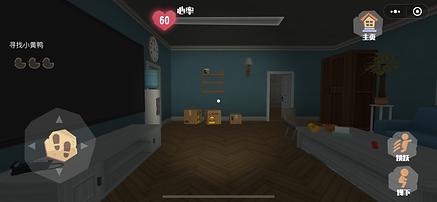

During play, the graphics, background music, and the gradual acceleration of my heartbeat created an atmosphere that made me feel nervous and scared, something that is worth learning from in subsequent designs.
Ideation
Concept: Experiences through interactive storytelling, looking back on past experiences, experiencing the lives of others and using transpersonal thinking to achieve emotional relief.
Mechanism: There are different experiences in the story, different choices lead to different endings, thus changing the perception and attitude of the experiencer

Story: The element of suspense drives the curiosity of the experiencer and the real story creates empathy.
Storyline and Scenario
Storyline Map
1. Disciplinary Publicity
1. Sketchbook + IELTS Practice Book
2. Night of the Haunted Dorm Room
3. Leaving
4. Uncovering the Pretender
5. Warning to Roommates
6. Putting Things to Rest

1. Conflict with F
2. Flight Back
3. Tolerate in Slience
1. Found the clues that A is poor student
1. Talk with NPC
1. Reprimanded by Teachers
1. Trick Toy
Game Levels

Game Art


Game UI


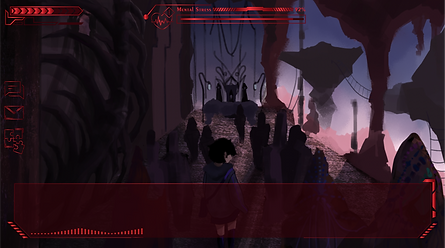
Outcome
